What can make a spending routine difficult?
A routine can become difficult to maintain when it requires more detail or time than you have available. Start with the information needed to identify each movement and review the totals. A spreadsheet, notebook or app can all support this task; the useful choice depends on your own working habits.
If you have several accounts or cash payments, keep track of which ones you have checked. Automatic imports also need review for dates, categories and duplicates. The recording method alone does not show whether the resulting list is complete.
Sources: Finanzas para Todos: preparing a monthly budget (Spanish) · checked on ; Finanzas para Todos: recording and reviewing spending (Spanish) · checked on .
How can you organise a short daily review?
Use three steps: record transactions, check the day and review the week. Five minutes is an optional daily time allowance, not a measured completion time. A missing receipt or a larger import may need a separate session. The purpose is to keep a manageable list of what you have checked.
1. Record the transaction
When convenient, record the amount, category, account and date. A note can help you recognise it later. Keep the receipt or statement available if you still need to confirm a detail; do not treat an uncertain amount as verified.
2. Check the day
Open the transaction list and compare it with the records available to you. Add missing items and correct dates or categories. Check whether an entry is already present before adding it again. Leave an unresolved difference identified for your next review.
3. Review the week
Set aside a separate weekly review when it suits you. Look at category totals and upcoming payments, then decide whether any planned amount needs changing. This session may take longer than the daily check, particularly when you are reviewing several accounts.
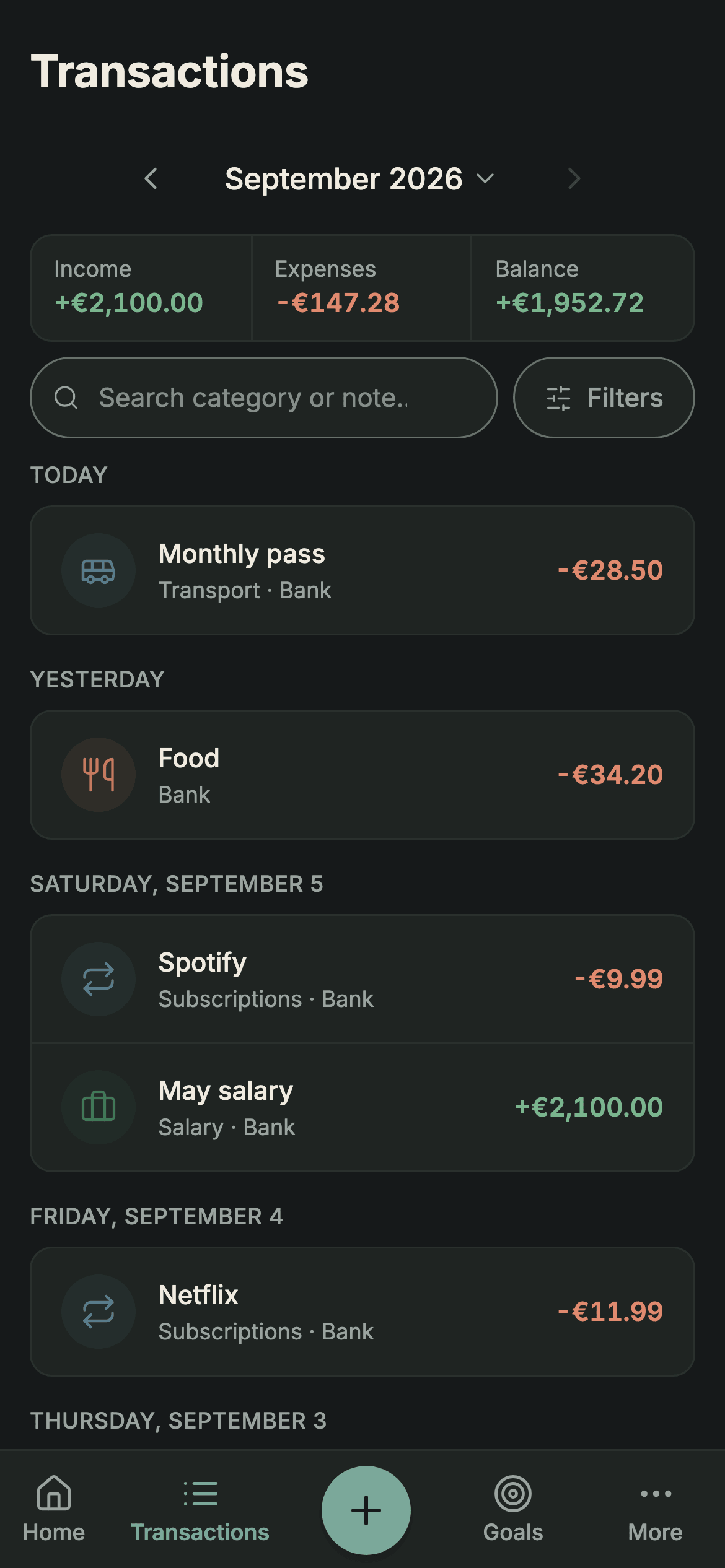
Which tool can you use for the routine?
Choose a tool that lets you record and retrieve the information you need on the device you use. Try a few transactions and compare the totals with your source records. Check the available export formats and plan limits before moving a larger history, especially if you expect to change tools later.
Sumant supports manual recording and CSV/XLSX imports through its web app on mobile and desktop. An email and password account is required. The free plan includes one import of up to 250 selected transactions; JSON export is free, while CSV/XLSX export requires PRO.
Sources: Sumant plans · checked on .
How can you resume after missing a few days?
Resume with a period you can check using receipts or statements. Add confirmed missing movements and identify gaps that remain uncertain. You do not have to reconstruct every detail in one sitting. Adjust the frequency or level of detail if your current routine is taking more time than you can give it.
A record is there to help you understand what happened. If actual spending differs from a plan, review the amount and circumstances before deciding what to change. An occasional missed review does not establish whether the whole method will work for you.